)
)
Shuttle Logistics Explained Simply
)
Complex topics from the bus and mobility industry – explained simply.
Whether it is a technical term, an industry trend or a service model – this article is about: shuttle logistics and what lies behind it.
)
)
)
Complex topics from the bus and mobility industry – explained simply.
Whether it is a technical term, an industry trend or a service model – this article is about: shuttle logistics and what lies behind it.
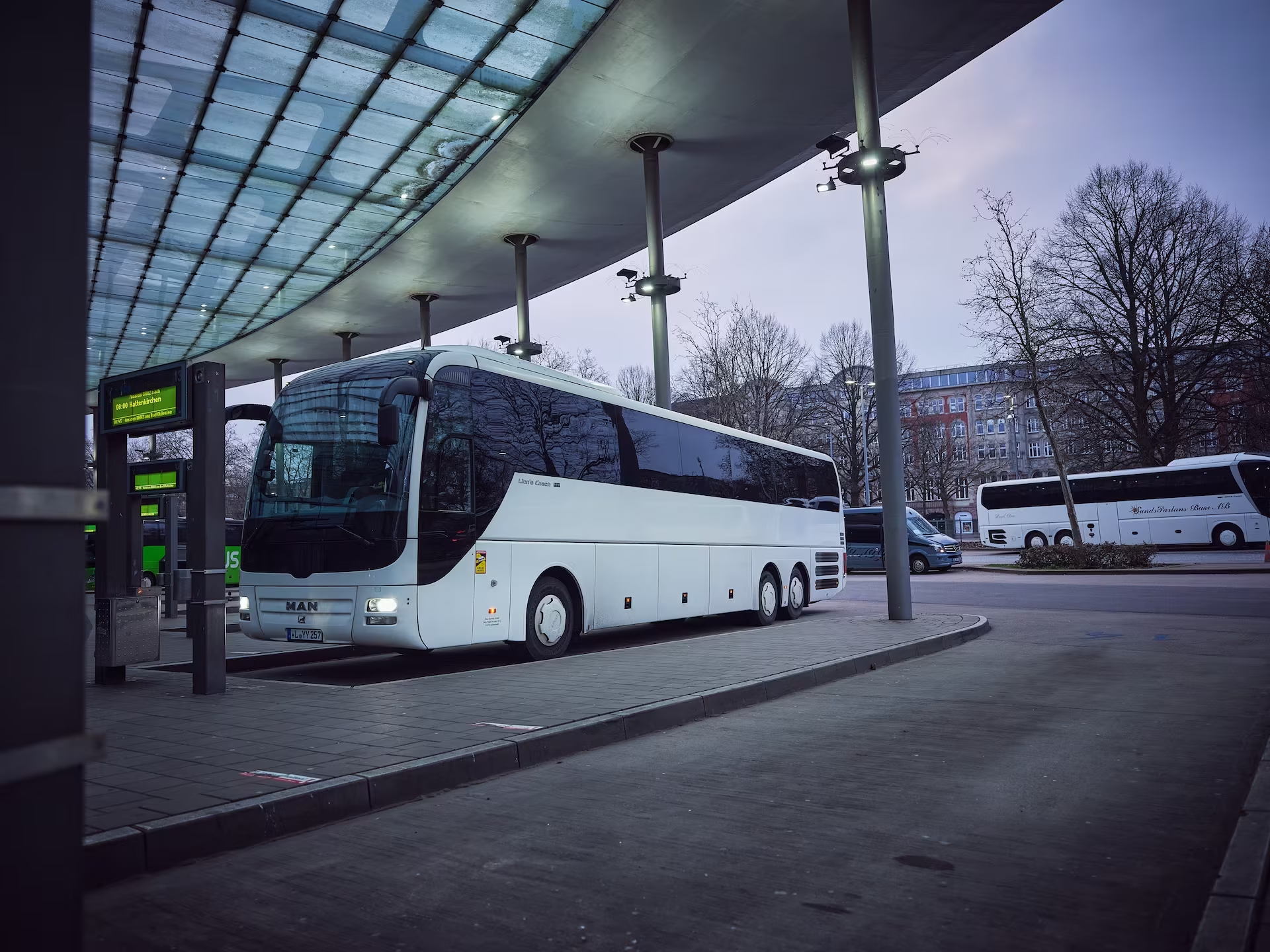
Shuttle logistics means that buses carry a specific group to a fixed plan between fixed points, for example between the station and the trade fair grounds or between the city and a plant. This can be a one-off, such as for a trade fair, or regular, such as for the daily commute.
A shuttle makes most sense when many people need to get to the same place at the same time, for example at the start of a shift or when an event programme begins. A shuttle consolidates journeys that would otherwise be made individually. Instead of everyone travelling separately and looking for a parking space, a few buses run to a shared plan.
The plan sets out in advance where the buses stop, when they run and how many vehicles are needed. During operation, this plan is managed and adjusted where necessary. Unlike public transport, the buses run only for this group, with a driver and to their own timetable.
)
Shuttles look different depending on the occasion. Five typical examples:
The first step is to establish how many passengers need to travel, when, and from where to where. For an employee shuttle, this means shift times, for example; for a trade fair, the opening hours.
This forms the basis of the shuttle plan, with stops, frequency, routes and suitable vehicles.
A bus and driver are scheduled for every journey, plus a replacement in case a vehicle is unavailable.
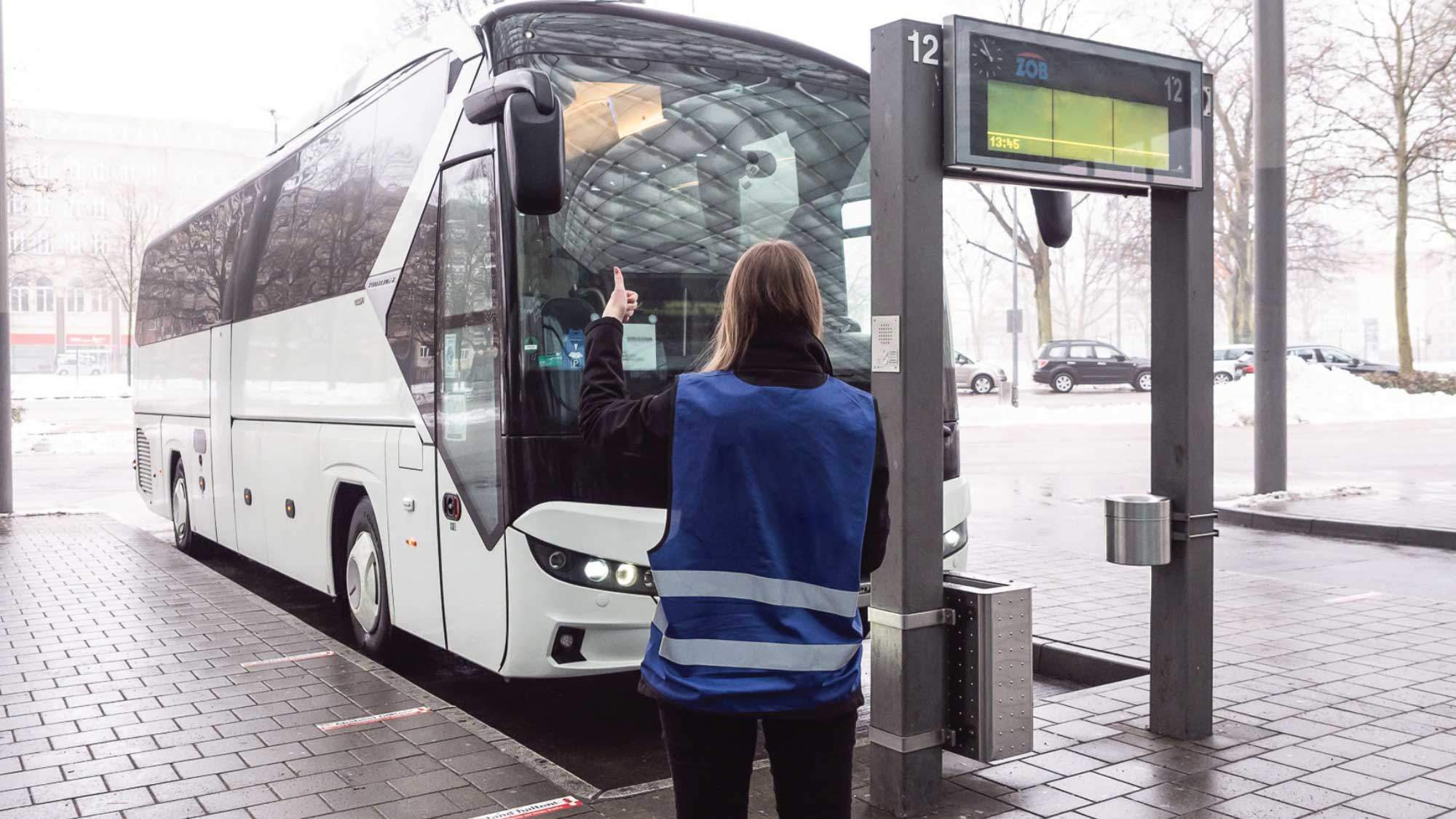
One contact person keeps track of all the buses and responds when times shift or more passengers turn up than expected.
Afterwards, what went well and where things got tight is recorded. For regular shuttles, this feeds into the next timetable.
| Term | Meaning |
|---|---|
| Stop | A fixed place where passengers get on and off, for example at the station, the hotel or the factory gate. |
| Frequency | The time between two departures from a stop. |
| Shuttle service | Buses run the same route back and forth between fixed points, for example between the car park and the entrance. |
| Round trip | A bus's complete circuit from the stop to the destination and back. The shorter the round trip, the more often a bus can run. |
| Staging area | An area where buses wait before they are deployed or between two journeys. |
| Peak demand | The moment when a particularly large number of passengers want to travel at the same time, for example at a shift change or after an event. |
| Dispatching | Planning which bus travels where and when, and with which driver. |
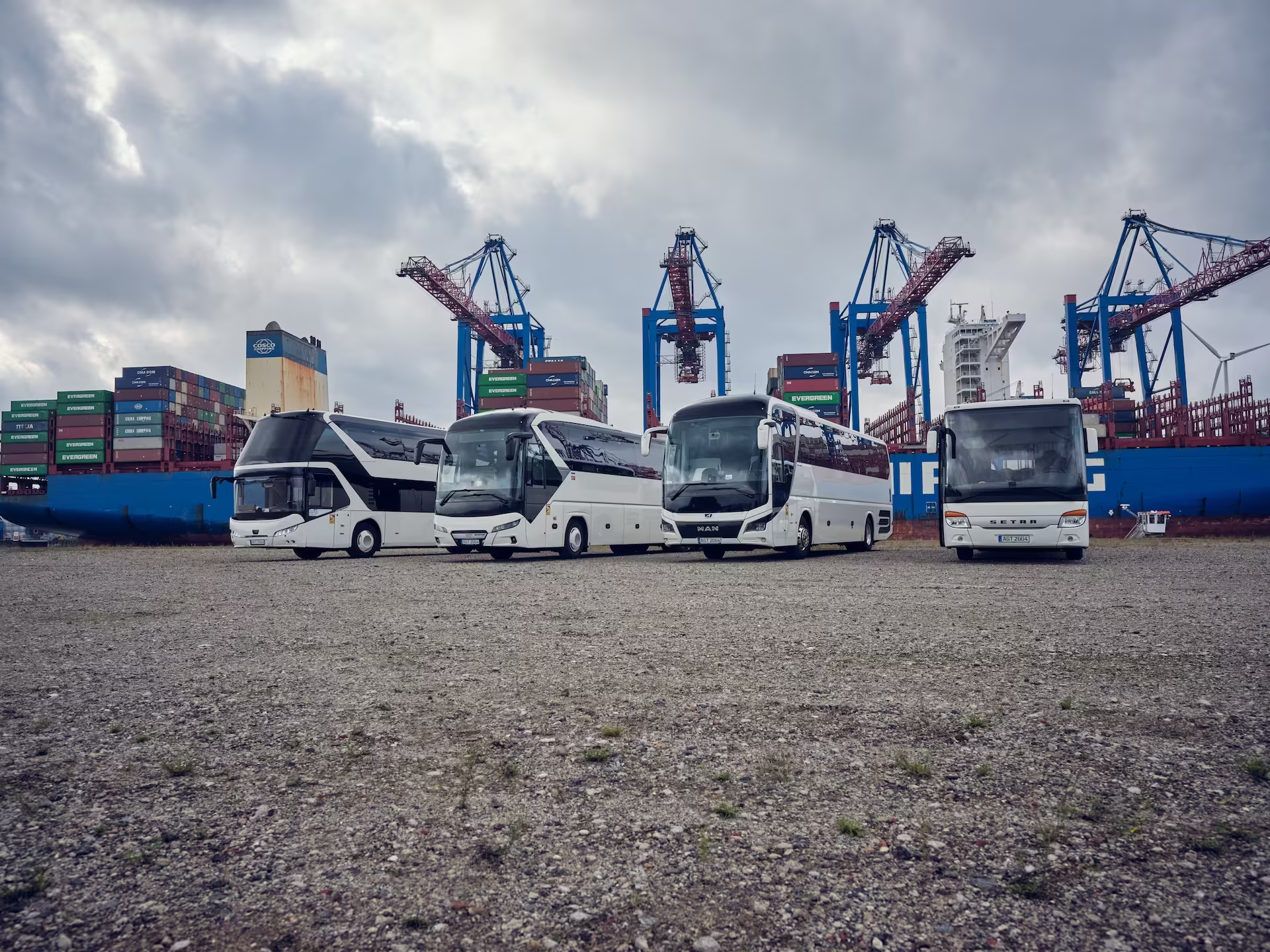
Which vehicles are suitable depends on the number of passengers, the route and the space available at the stops. From van to double-decker coach: vehicles for 1 to 75 people, with several vehicles for larger groups.
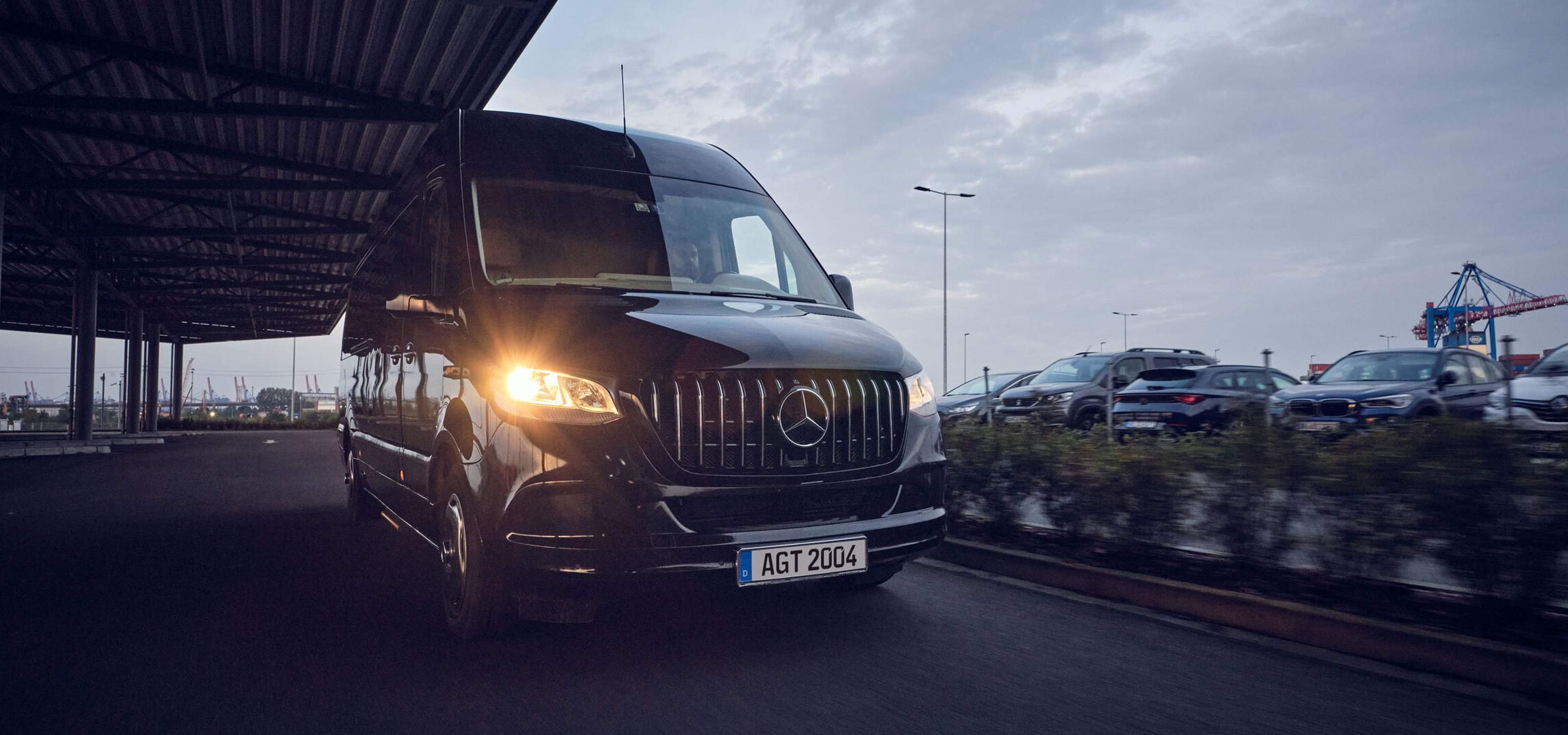
For longer distances, coaches and double-decker coaches are a good fit because they carry many passengers at once. In return, they need enough space at the stop. Vans and minibuses are more manoeuvrable and suit small groups and city-centre hotels. For short shuttle routes with very large numbers of passengers, for example on large company premises or trade fair grounds, a city bus can also make sense. It then runs only for this group, not as a public scheduled service.
Vehicles with a boarding aid on request, depending on the partner operator and availability. Our bus size comparison shows which bus size suits how many people.
)
The client clarifies:
How many passengers travel and when, for example according to shift schedules or the programme
Where the buses may stop and wait at the site
How passengers are informed
Coordination with the site and, where necessary, with the authorities
The shuttle partner takes care of:
The shuttle plan with stops, frequency and vehicles
Buses and drivers
Timetables for all journeys
Managing departures during operation
A replacement if a vehicle is unavailable
A contact person, including on site
At trade fairs, festivals or large company celebrations, many people want to arrive at the same time and leave at the same time. Shuttle logistics is then part of event logistics. There are two big waves: arrival before the programme starts and departure afterwards, which is usually the harder one. Why that is and what helps is explained in our article on the three main problems in event logistics.
If guests are coming from many cities, multi-departure transport (‘Sternfahrt’) is a good option: buses start from many locations and all travel to the same destination. Anyone arriving by train or car switches to a shuttle service at the station or car park. For large-scale events, a traffic management plan is often part of the permit; the responsible authority decides what it must contain.
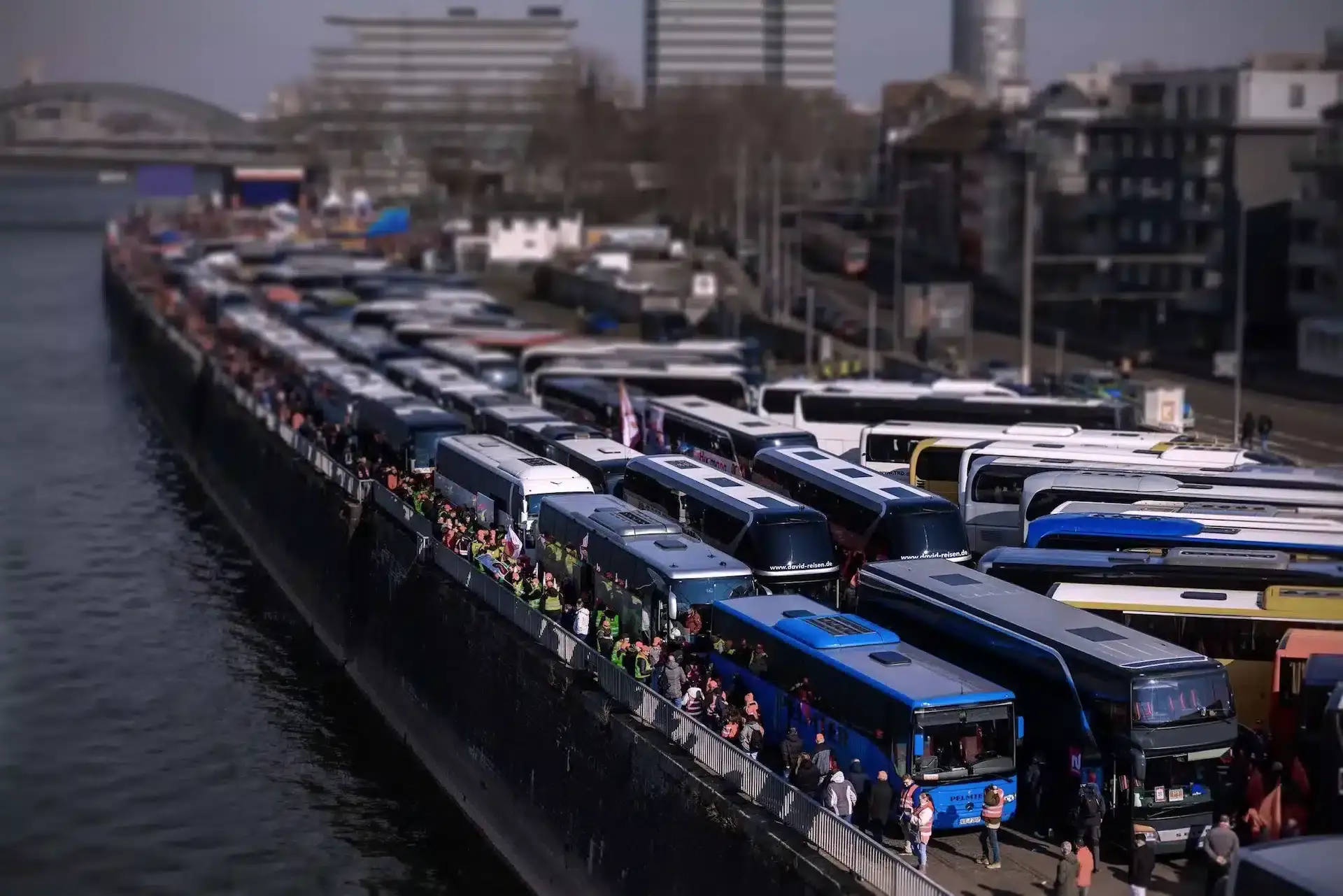
One example is our multi-departure transport (‘Sternfahrt’) for a trade union, 2025: 48,896 passengers, around 150 departure points, five parallel large-scale events. More than 1,200 buses from more than 240 partner operators were involved. The case study shows what the mobility concept looked like. For large-scale events, we recommend enquiring early.
)
agt is a coach charter agency. We plan, organise and manage passenger transport, from a fixed commuter service for your staff to shuttles for large-scale events. To do this, we work with more than 1,500 partner operators across Europe. As a rule, buses and drivers are provided by our partner operators.
We build in backup plans in case of breakdowns. We are available 24/7, including on site. On request: digital check-in confirming the bus's departure and arrival, and live status updates during the journey, for example on delays.
It all begins with a needs and location analysis. This determines the stops, frequency and vehicle classes. One contact person accompanies the project from the enquiry to the last return journey and agrees any changes directly with you. We also review short-notice enquiries on a case-by-case basis.
More on the individual services: employee shuttle, on-site shuttle, airport transfer and event shuttle.

)
The route, times and approximate number of passengers are enough to get started. agt will draw up the shuttle plan for you.
Mainly on the number of passengers and how many of them travel at the same time. This determines the number of vehicles. Other factors are the route, the length of the job, how often the service runs, and any additional services. Find out more in our article on the cost of coach hire.
)
)
)