

Didier Ramos Silva Co
October 1, 2026
/ 12 Minutes
Didier Ramos Silva Co
October 1, 2026
/ 12 Minutes
Peak loads: Guests arrive within a narrow time window and want to leave almost simultaneously after the programme. Departure is the harder part and should therefore be planned first.
Scarce capacity: Drivers and buses are quickly booked up on popular dates, and costs in the coach industry are rising. Enquiring early and planning ahead for long event days gives you more room to manoeuvre.
Many parties involved: Participant numbers change at short notice, and every change has to reach the organiser, venue, authorities and coach operators. A single point of contact for all changes prevents gaps.
All three problems can be eased if transport is planned early and as a whole. The following sections explain the causes and what helps. At the end, we answer frequently asked questions, for example on the number of buses and accessible planning.
Event logistics often refers to transporting stages, technical equipment and materials. This article is about moving people: guests, participants, speakers and staff who are taken to and collected from a trade fair, congress, company celebration or large-scale event.
For many guests, the event begins and ends with this journey. Anyone left waiting at the pick-up point after the programme takes exactly that memory home.
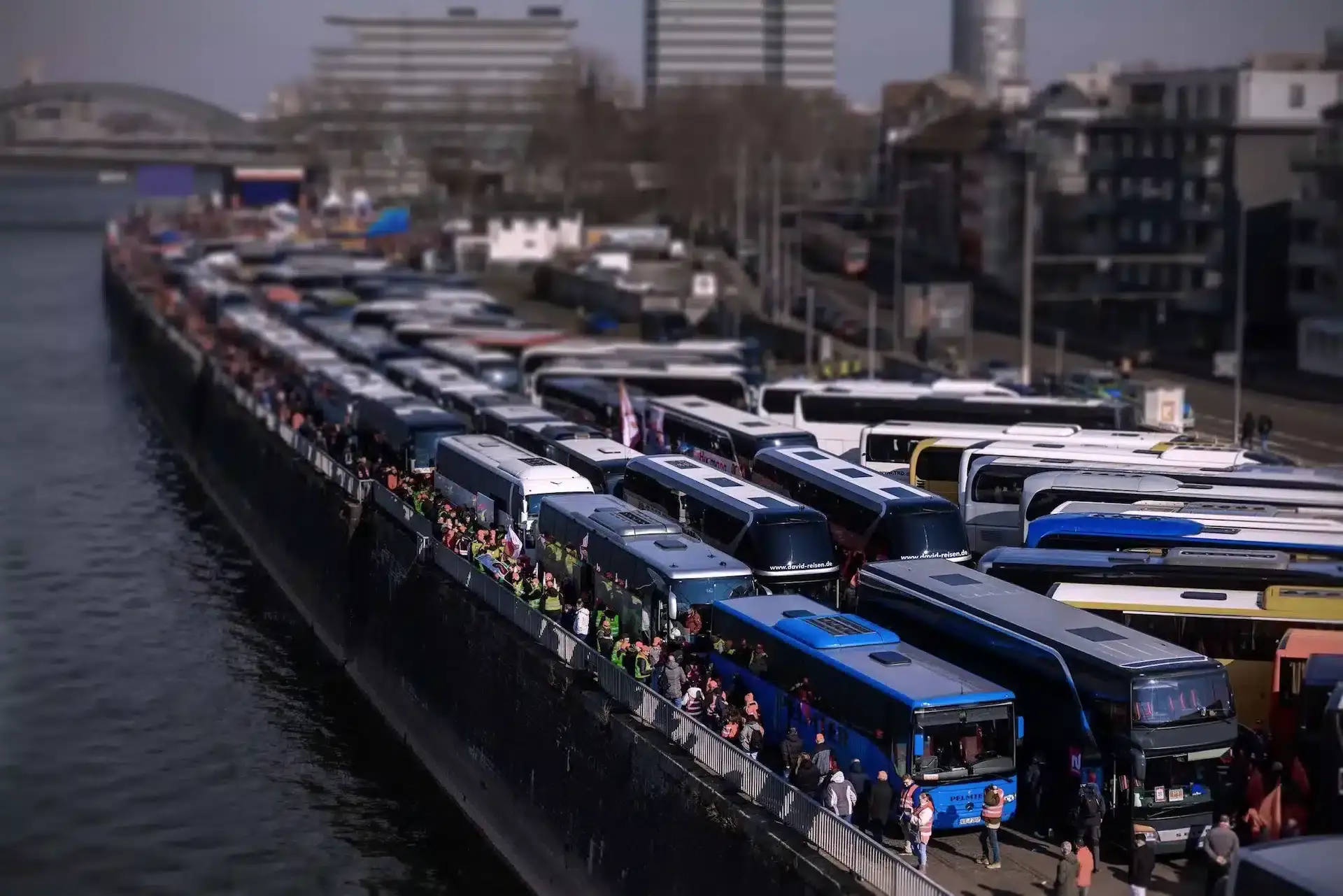
Arrival is comparatively easy to plan. The start time is fixed and guests arrive within a manageable time window. Departure is a different matter: the programme overruns, the evening ends earlier than expected, or a large share of guests leaves at the same moment. Within a few minutes, a very large number of people are standing at the same pick-up points.
The result is queues, crowding and traffic jams around the venue. At large-scale events, this becomes a safety issue. That is why the approval authorities require, in addition to the safety concept, a traffic management plan covering arrival and departure.
What helps
Plan departure first and work through several scenarios: on-time finish, delays, staggered departure.
Provide more seats than strictly required and run the buses as a shuttle loop instead of waiting for each bus to fill up.
Agree pick-up and waiting areas with the venue and authorities early on, including the routes to them.
Plan a reserve vehicle that can step in at short notice.
Bundling arrivals also takes pressure off the surrounding area. According to a fact sheet by the climate protection agency energiekonsens, around 70 per cent of an event's CO₂ emissions are caused by arrival and departure.
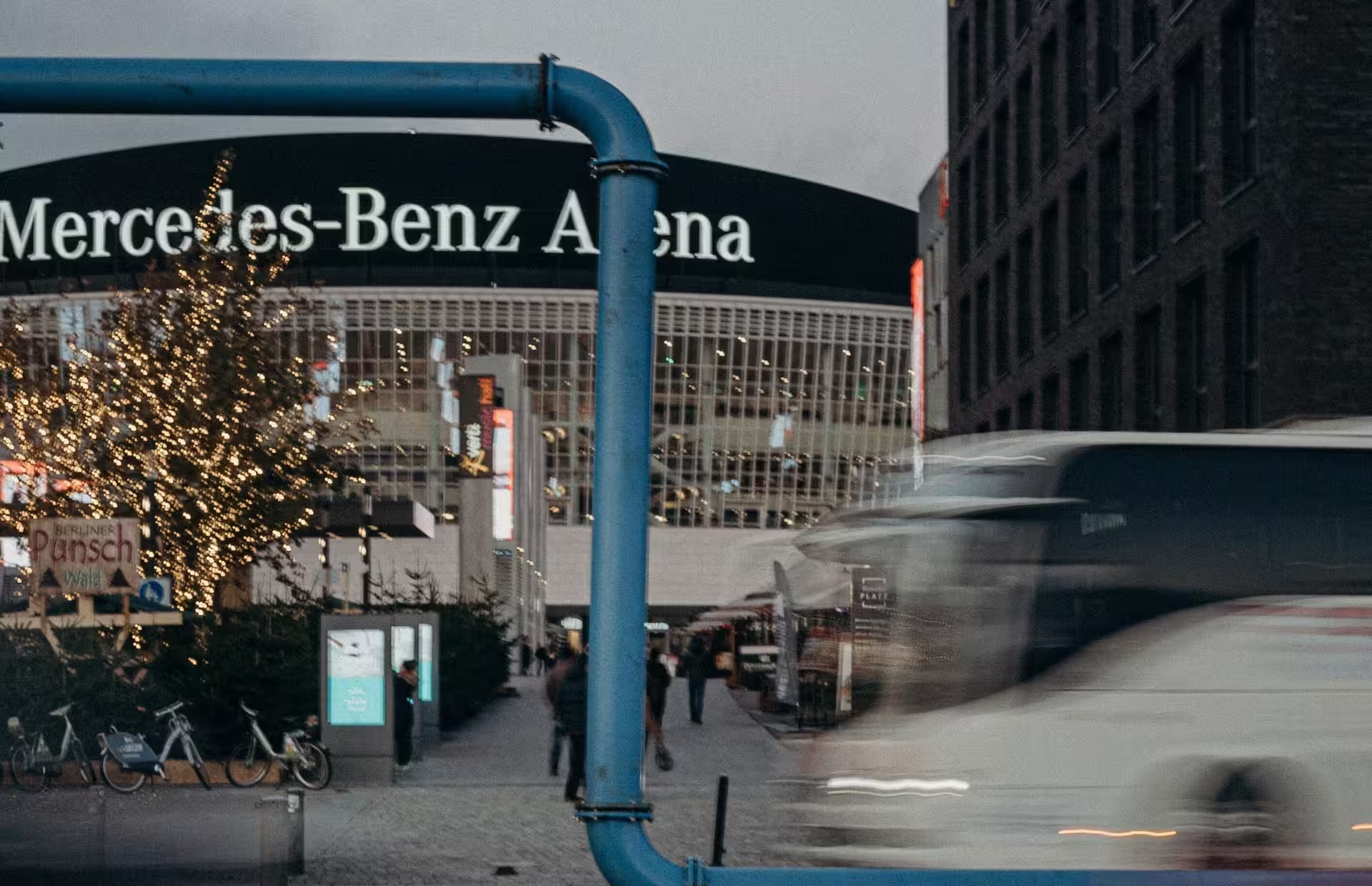
Even the best planning is of little use if no bus is available on the day you need it. Things get particularly tight when several events in one region fall on the same date, for example during major trade fairs. Behind this lies a persistent shortage: according to the Association of German Transport Companies (VDV), around 25,000 bus drivers are missing nationwide in local public transport and occasional services alone.
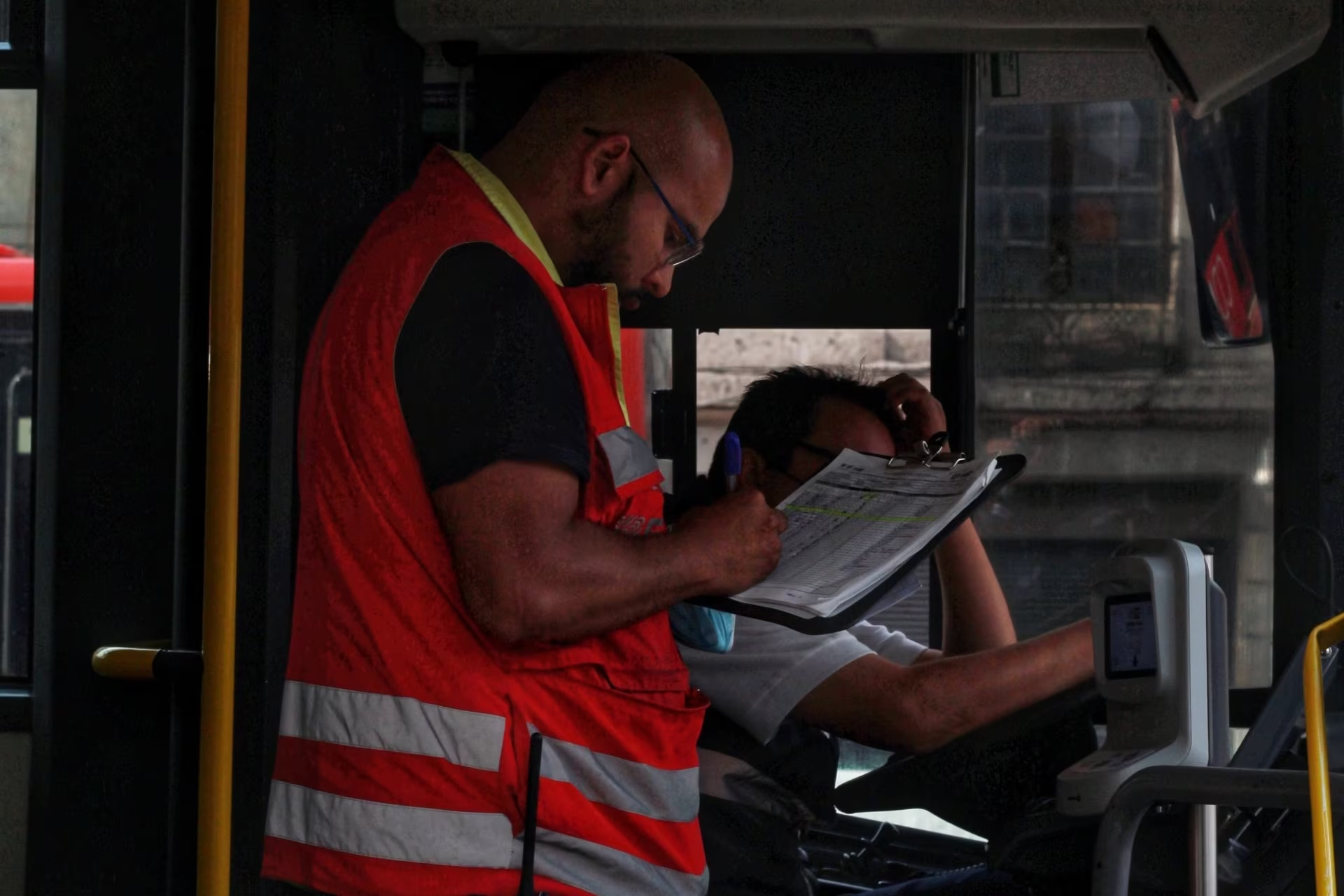
Then there are the rules on driving and rest times. As a rule, a bus driver may drive for no more than nine hours a day and must take a break of at least 45 minutes after four and a half hours. A rest period between two working days is also mandatory. An event day with an early-morning outbound trip and a late-night return therefore often cannot be covered by the same driver. Common solutions are a second driver, a driver change during the event or an overnight stay for the driving staff. Each of these costs extra and should therefore be factored into planning and budget early on. Our article on driving and rest times for bus drivers explains the rules in detail.
Costs are rising, too. In the June 2026 industry survey by the Federal Association of German Bus and Coach Operators (bdo), around 80 per cent of the coach operators surveyed said they were heavily or very heavily burdened by fuel costs. Most expect further price increases if energy prices remain high.
What helps
Enquire early, as soon as the date, location and approximate number of participants are known. The more popular the date, the earlier.
Check the schedule against driving times and breaks while the programme can still be changed.
Clarify who steps in if a vehicle or driver drops out at short notice.
Leave some leeway in the budget. Our article on the costs of a coach journey shows which factors determine the price.
Everything from one source. We organise the journey and the services that go with it.

EcoVadis Platinum 2026 and processes certified to ISO 14001.
As a rule, you will receive a non-binding quote within 24 hours on working days.
From limousine to double-decker coach, matched to your group, route and occasion. From one passenger.
According to the bdo industry survey, coach operators are seeing their customers decide at shorter notice. With events, participant numbers also change until shortly before the date. Late registrations come in, guests cancel, a programme item is added. On top of that, some registered guests do not show up, and others want to travel without having registered.
At the same time, many parties are involved: organiser, venue, hotels, authorities, one or more coach operators and, finally, the guests. Every change has to reach everyone it affects. If information gets lost along the way, the bus waits at the wrong entrance. Or it leaves half empty while guests are waiting at another hotel.
What helps
Appoint one point of contact who is responsible for all transport and bundles all changes.
Agree deadlines for participant numbers and leave room for increases.
Inform guests in advance: departure times, pick-up points and a phone number for the event day.
Define how short-notice changes are handled: who decides, who informs whom and by when.
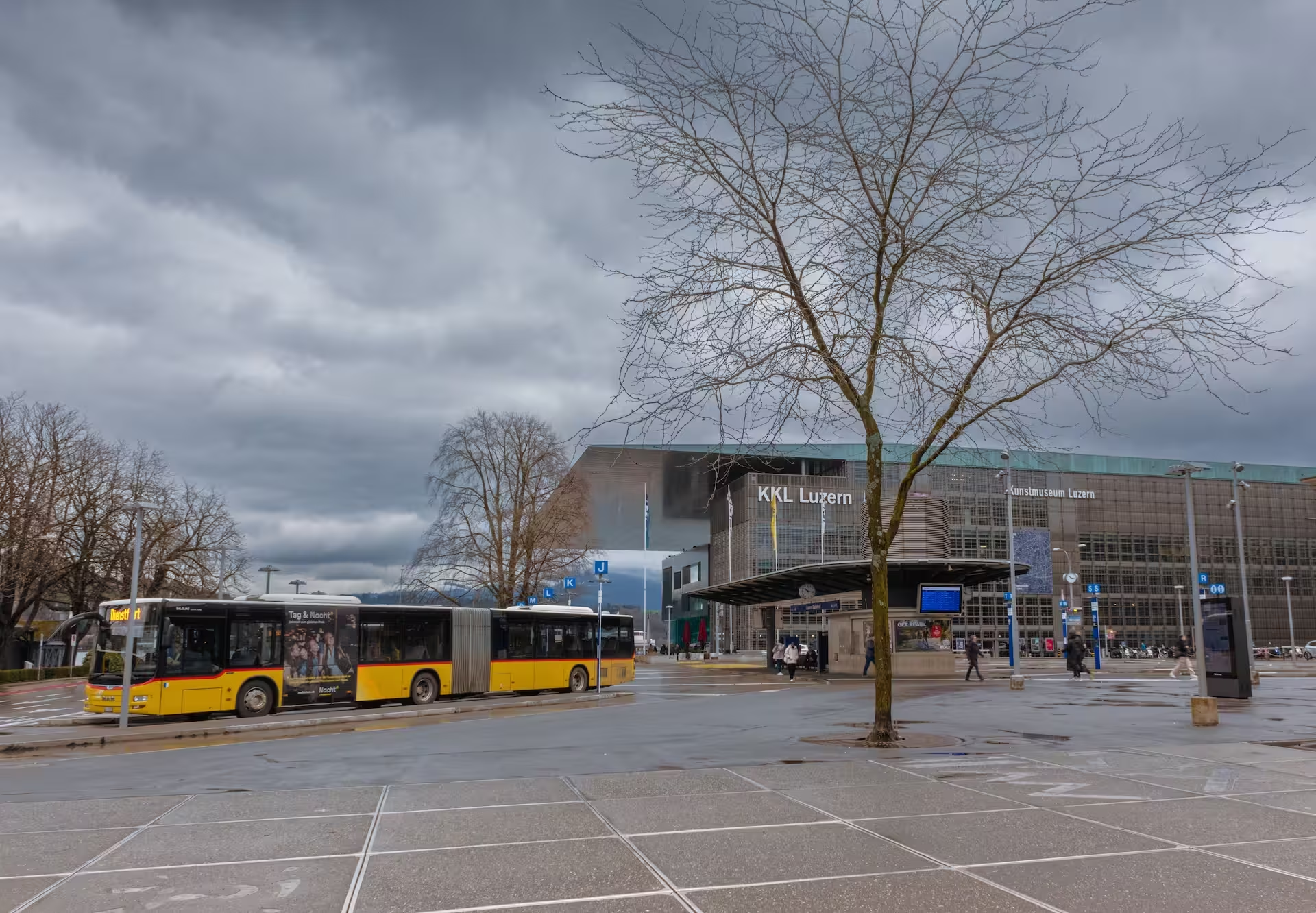
As soon as the date, location and approximate number of participants are known, send your enquiry and secure vehicles and drivers. On popular dates, every day counts.

Work through the departure, agree pick-up and waiting areas with the venue and authorities, and plan a driver change for long event days.
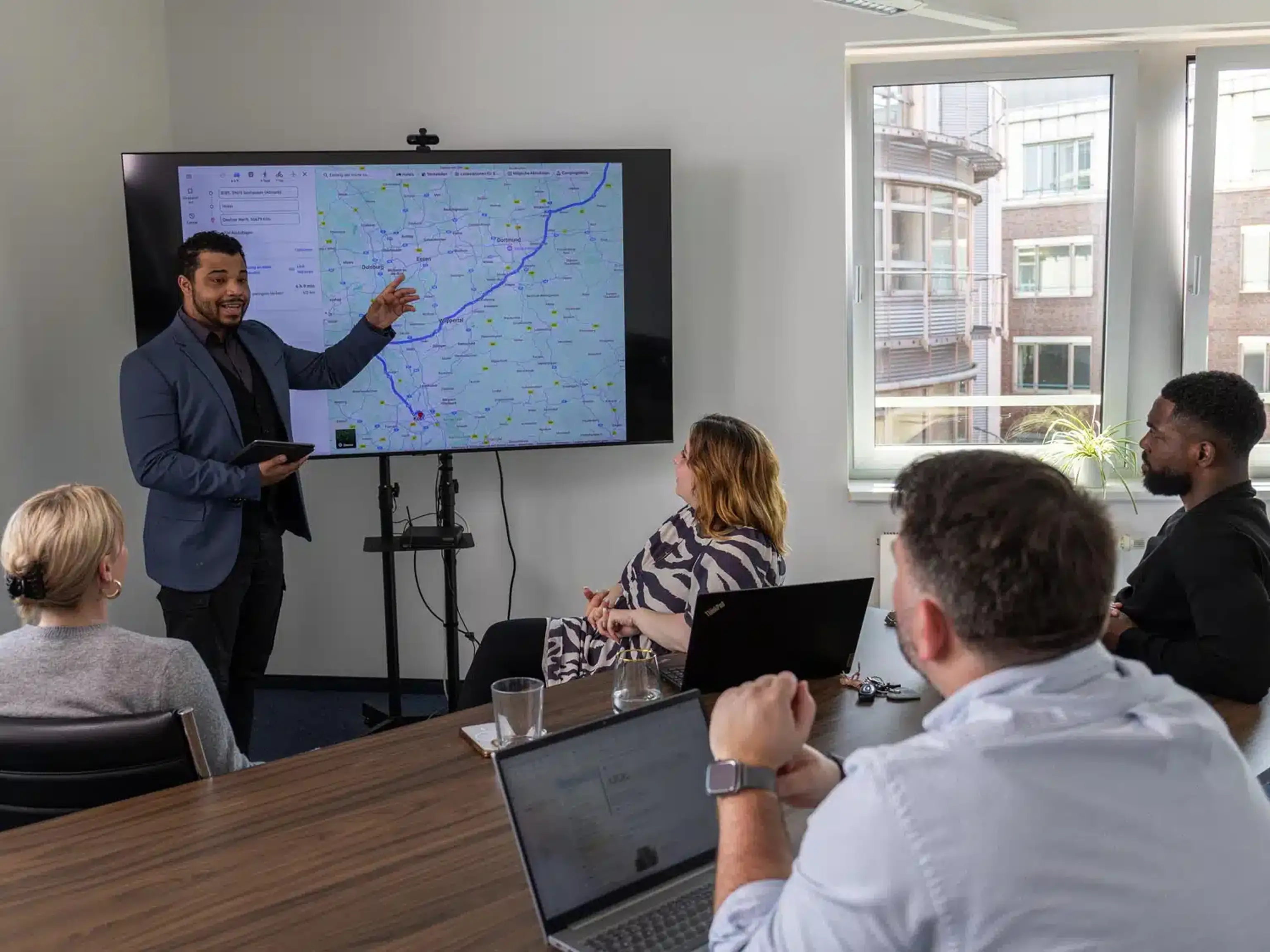
Confirm the number of participants and inform guests about departure times, pick-up points and a phone number for the event day.

One point of contact is available on site, manages departures and deploys the reserve if a vehicle drops out.
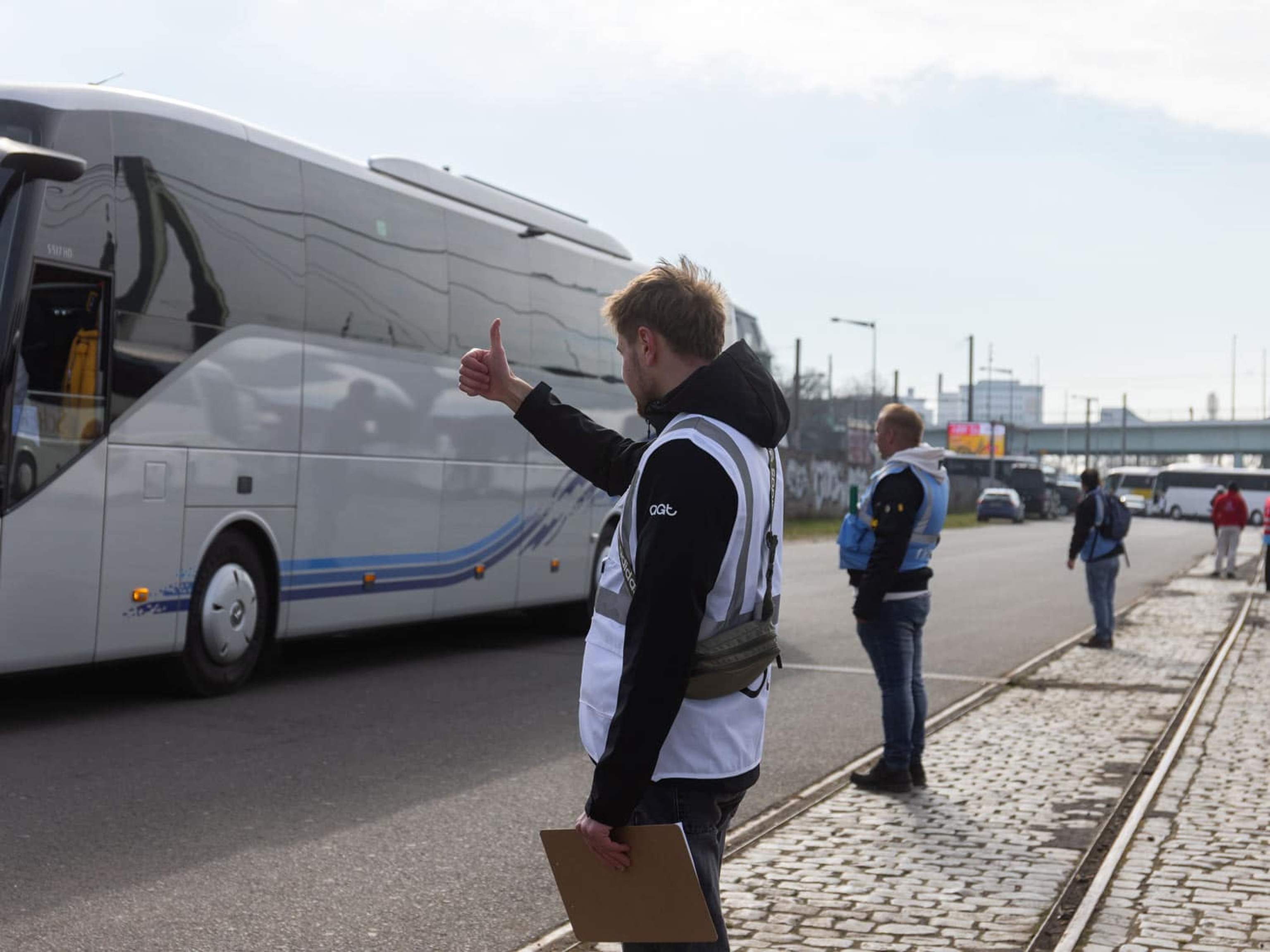
Planning event logistics properly means defining responsibilities, reserves and communication channels before the event day begins. The three problems become visible on the event day, but they are decided beforehand. Four points make the difference:
One responsible point of contact: One person or team plans all transport, knows every departure point and is authorised to make decisions on the event day. If individual buses or routes each have their own contact, changes do not reach everyone.
Reserves from the outset: Extra seats, a reserve vehicle and a planned driver change belong in the budget before things get tight, not on the event day itself.
A fixed communication channel: Decide in advance who approves changes, who informs drivers, venue and guests, and through which channel. There is no time for this on the event day.
A review afterwards: After the event, note which intervals were too tight and which pick-up points were poorly placed. This makes the next round of planning more accurate.
If you cannot cover these points yourself, hand over transport as a whole to a partner who plans, manages departures and is available on the event day.
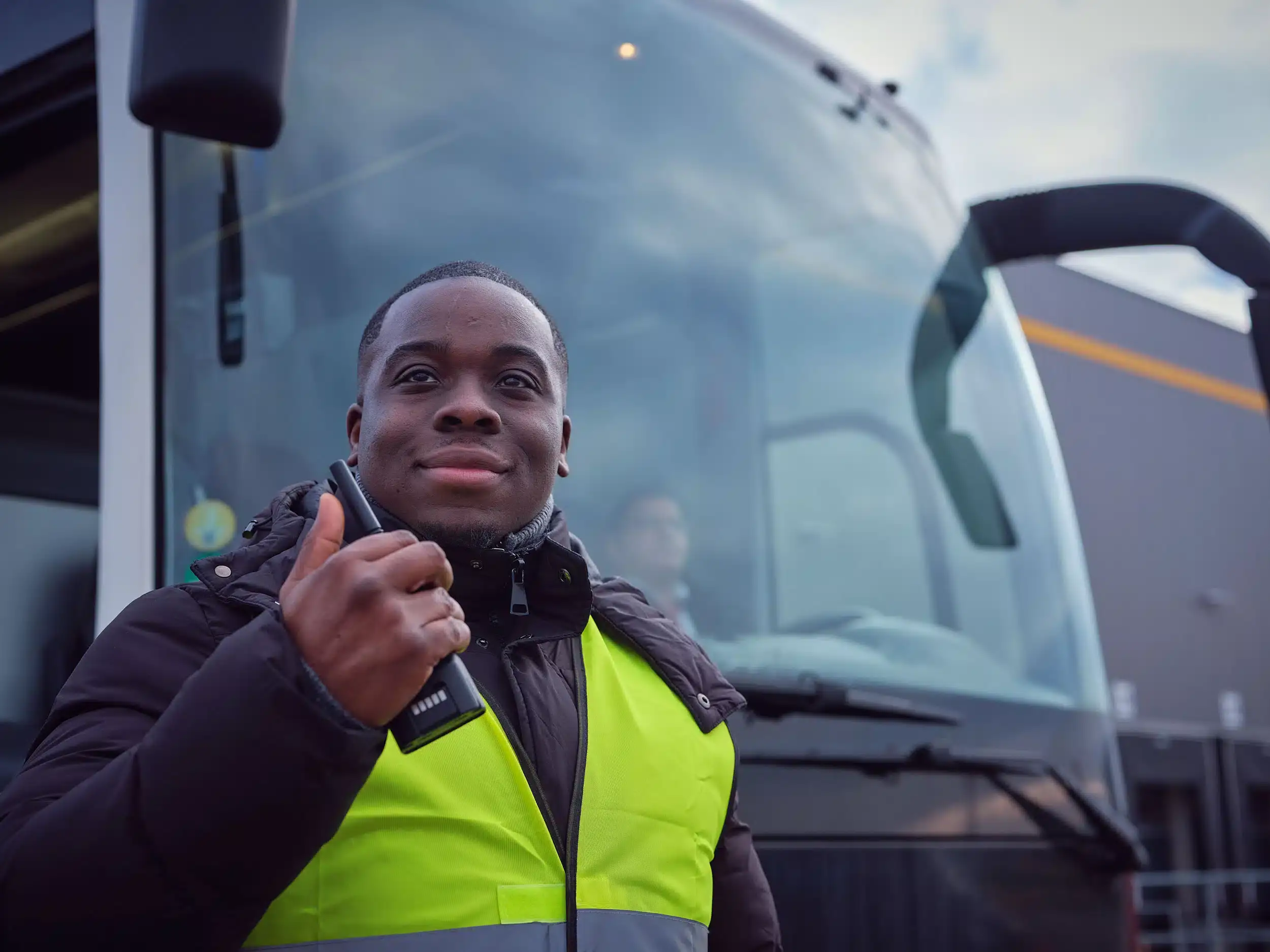
As soon as the date, location and approximate number of participants are known. If a traffic management plan for a large-scale event has to be agreed with the authorities, planning starts correspondingly earlier. The more popular the date, the earlier it pays to enquire, because drivers and vehicles are then quickly booked up.